How to Choose the Best Single Bolt Pipe Clamp for Your Needs?
Choosing the right Single Bolt Pipe Clamp is crucial for effective pipe management. With various options available, understanding your specific needs can be overwhelming. This guide aims to clarify the selection process and enhance your decision-making skills.
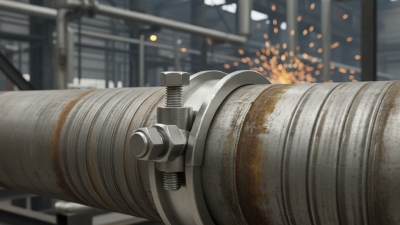
A Single Bolt Pipe Clamp is designed for simplicity and efficiency. It secures pipes firmly, preventing leaks and ensuring stability. Different materials, sizes, and load capacities exist. Each option serves its unique purpose. Exploring these choices may seem daunting. Yet, gaining a clear understanding helps in making an informed choice.
Mistakes can happen in this selection process. You might overlook essential details like material compatibility. Sometimes, a clamp that seems perfect might not fit your pipe size properly. Reflecting on past choices can guide better decisions. With the right knowledge, you can ensure that your Single Bolt Pipe Clamp meets both your current and future needs effectively.
Factors to Consider When Selecting a Single Bolt Pipe Clamp
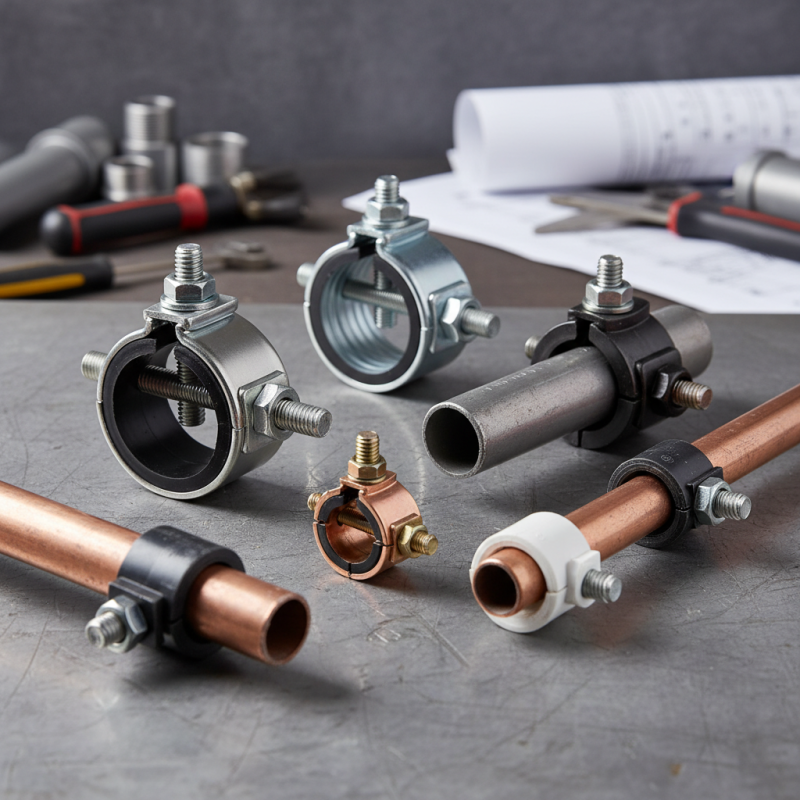
When selecting a single bolt pipe clamp, several factors come into play.
Consider the pipe size and material.
The clamp must fit the specific pipe diameter. Different materials like PVC or steel may require distinct types of clamps.
Think about where the clamp will be used.
Is it for indoor or outdoor use?
This affects durability and weather resistance.
Another important aspect is load capacity.
Ensure the clamp can support the weight and tension it will experience.
Some clamps may seem sturdy but may fail under pressure.
Look into the design of the clamp. A simple design can offer better ease of installation.
However, a more complex design might provide added security, especially in critical applications.
Use cases vary widely.
Reflect on the installation environment.
Are there vibrations present? This can influence the clamp's performance.
Many users overlook this detail, leading to premature failures.
Lastly, always consider feedback from others who have used specific clamps.
Their experiences can highlight potential strengths and weaknesses that may not be obvious at first glance.
Your choice should resonate with both the specifics of your project and shared insights from the community.
Understanding the Different Materials Used in Pipe Clamps
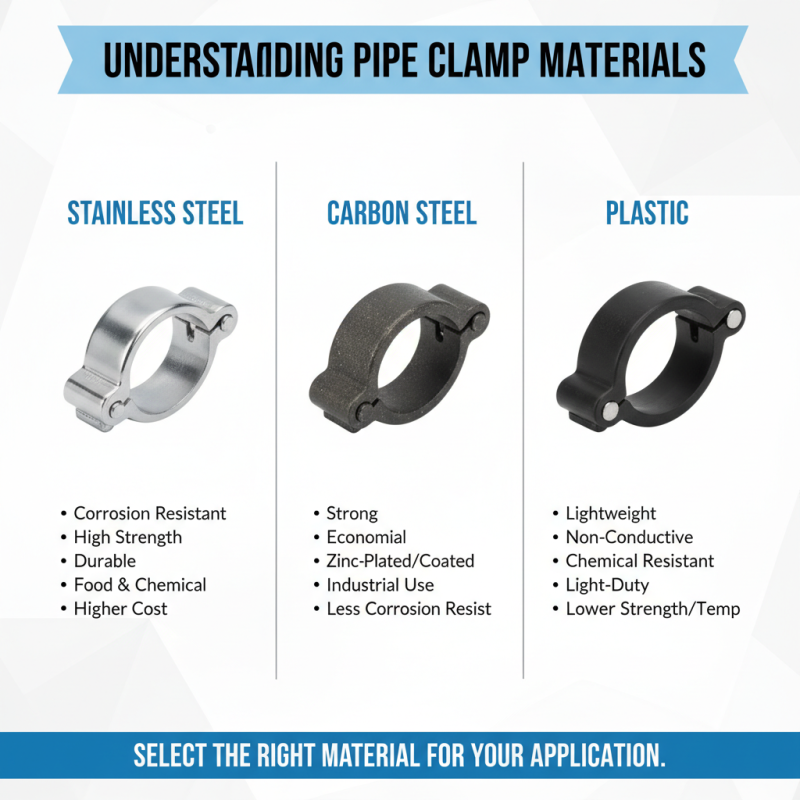
When selecting a single bolt pipe clamp, understanding the materials is crucial. Common materials include stainless steel, carbon steel, and plastic. Each material offers unique benefits and drawbacks for different applications.
Stainless steel clamps are resistant to corrosion, making them ideal for outdoor use. They provide durability and strength under high pressure. However, they can be more expensive. Carbon steel, on the other hand, is strong but may rust without proper coating. This requires ongoing maintenance. Plastic clamps are lightweight and resistant to corrosion but may not handle high pressure as well as metal options.
Tips: Always consider the environment where the clamp will be used. Wet or humid areas require more durable materials. Think about the pressure and temperature of the pipes too. The right choice can prevent costly leaks. Testing different options might yield surprising results. Don’t shy away from getting expert advice; it can clarify your options.
Evaluating Load Capacity and Size Requirements for Your Application
When selecting a single bolt pipe clamp, understanding load capacity and size requirements is vital. Load capacity refers to the weight a clamp can support without compromising its integrity. According to industry standards, many single bolt clamps can support loads ranging from 50 to 500 pounds, depending on the material and design. This variability highlights the importance of considering your specific application to prevent failures.
Size requirements also play a crucial role. A clamp must fit the pipe snugly, which means measuring the diameter accurately. Many professionals use tools like calipers to ensure precision. Misjudgments in sizing can lead to inadequate support. If a clamp is too loose, it can cause vibrations and leaks. Conversely, an overly tight clamp can damage the pipe. Reports suggest that nearly 30% of clamp failures result from improper sizing.
Choosing the right single bolt pipe clamp involves weighing these factors carefully. Load requirements must be matched with the available space. A mismatch can result in costly repairs or downtime. Reflecting on past projects helps in understanding the nuances of loading and fitting. Avoid the trap of assuming one size fits all. Each application is unique and deserves thorough evaluation.
How to Choose the Best Single Bolt Pipe Clamp for Your Needs?
| Pipe Size |
Load Capacity (lbs) |
Material Type |
Weight (lbs) |
Dimensions (inches) |
| 1/2" |
300 |
Galvanized Steel |
1.2 |
2.5 x 2.5 |
| 3/4" |
500 |
Stainless Steel |
1.8 |
3 x 3 |
| 1" |
750 |
Black Iron |
2.5 |
3.5 x 3.5 |
| 1 1/4" |
1000 |
Aluminum |
3.0 |
4 x 4 |
| 1 1/2" |
1250 |
Plastic |
2.0 |
5 x 5 |
Comparing Corrosion Resistance Ratings in Single Bolt Pipe Clamps
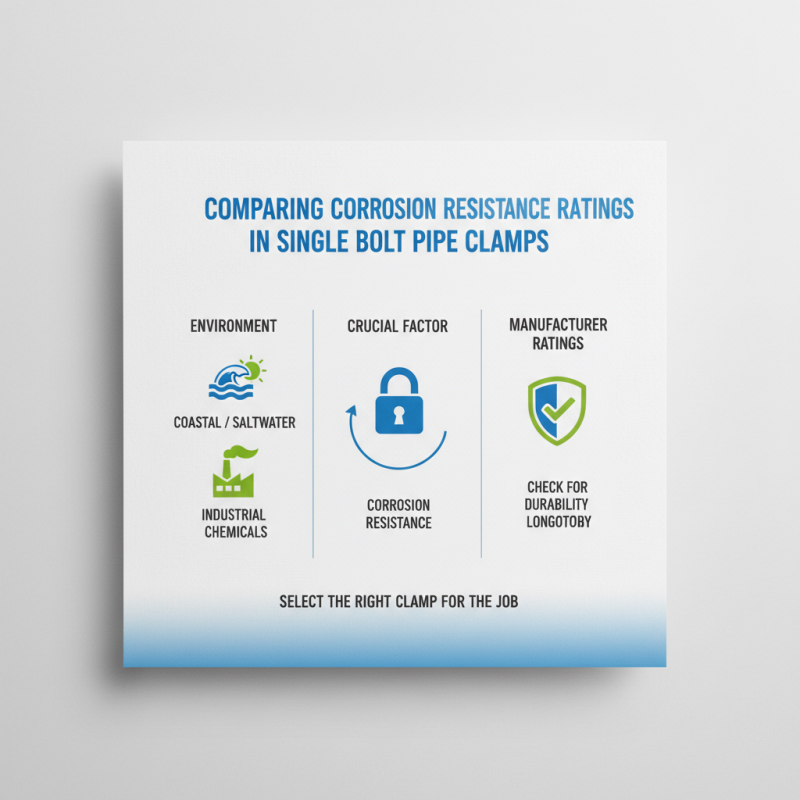
When selecting a single bolt pipe clamp, corrosion resistance is crucial. Different environments expose clamps to varying levels of moisture and chemicals. For instance, a clamp used in a coastal area will face saltwater, while one in a factory might encounter acids. It's essential to check the corrosion resistance ratings provided by manufacturers. These ratings help determine how well a clamp will hold up over time.
Materials play a vital role in corrosion resistance. Stainless steel and coated options are often preferred for their durability. However, not all stainless steel grades are equal. Understanding these grades can be challenging. Some might claim to be corrosion-resistant but are not suited for harsher environments.
Evaluating the conditions where the clamp will be used is vital. Think about temperature fluctuations, humidity, and chemical exposure. A thorough analysis can guide you to make an informed choice. Researching online or consulting experts can provide necessary insights. However, remember that even the best products may not last forever. Regular inspections and maintenance are essential to ensure optimal performance.
Assessing Installation Ease and Maintenance Needs of Clamps
When selecting a single bolt pipe clamp, installation ease is essential. A well-designed clamp allows for quick and secure fixing. Look for clamps with user-friendly features, such as adjustable tension mechanisms or ergonomic designs. These not only speed up the installation but also reduce the likelihood of errors. Sometimes, even minor design flaws can lead to frustration during setup. Assessing these elements can save time and effort.
Maintaining your clamps is another critical factor. Heavily used clamps may require regular inspections. Look for materials that resist corrosion and wear. This ensures longevity. However, some clamps may pose difficulties during maintenance. Limited accessibility or complex disassembly can hinder routine checks. Choosing a clamp with a straightforward maintenance routine is vital. It's important to reflect on how often you'll need to access the clamp for adjustments or repairs. This element can make a significant difference in the overall performance and reliability of your piping system.
Assessing Installation Ease and Maintenance Needs of Single Bolt Pipe Clamps