Choosing the right No Hub Coupling manufacturer can influence installation speed, pipeline stability, and long-term maintenance costs. Global buyers often compare suppliers across different markets, standards, and production capabilities. A coupling may appear simple, yet its performance depends on material quality, gasket design, clamp strength, and dimensional accuracy.
This guide examines leading No Hub Coupling manufacturers serving international customers. It considers product consistency, manufacturing experience, quality control, technical documentation, and export support. Reliable manufacturers usually provide clear specifications, pressure information, testing records, and compatibility guidance. Buyers should also check whether products match project requirements, including pipe diameter, application temperature, corrosion exposure, and local building standards.
Details matter. A poorly fitted gasket may cause leakage after installation. An uneven clamp can create unnecessary stress around the pipe joint. These problems are not always visible in a product photograph. Experienced sourcing teams should request samples, inspect packaging, review inspection procedures, and confirm replacement-part availability before placing large orders.
Not every established supplier is ideal for every project. That is worth remembering. Some manufacturers offer strong pricing but limited technical support. Others provide excellent documentation but longer lead times. This overview compares practical strengths and possible limitations, helping engineers, distributors, and contractors make more dependable purchasing decisions. It does not replace professional verification, and supplier claims should be checked against actual test results and project conditions.
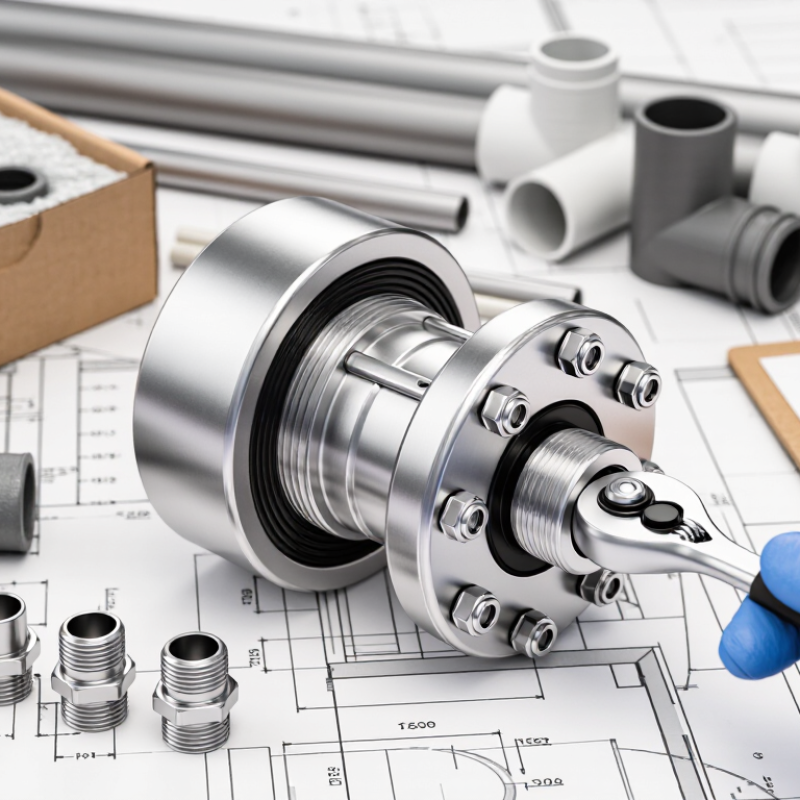
No hub couplings join hubless cast iron drainage pipe with a flexible elastomeric gasket and stainless-steel shield. The gasket seals the joint. The shield supplies circumferential pressure. Torque-controlled clamps help maintain consistent compression during installation. ASTM C1277 and CISPI 310 provide widely used performance and installation references. These standards address leakage resistance, assembly strength, and clamp design. In the field, alignment still matters more than many buyers expect. A coupling cannot correct a badly cut pipe.
Their main function is fast, compact, and serviceable connection. Plumbers commonly use them in sanitary drainage, vent systems, commercial kitchens, hospitals, and high-rise renovation work. The shield also helps resist movement, but it does not replace proper pipe support. Thermal movement, vibration, and pressure changes can expose weak installation practices. That uncomfortable detail is often missed in product comparisons.
The U.S. Environmental Protection Agency’s WaterSense 2023 Accomplishments Report recorded more than 7 trillion gallons of cumulative water savings from labeled efficiency products. No hub couplings do not create those savings directly. However, reliable drainage joints can reduce hidden leakage and maintenance waste across large facilities. Buyers should review gasket material, shield thickness, clamp torque, corrosion resistance, and certification records. A lower purchase price may look efficient, yet repeated callouts can make it expensive. Product data sheets are useful, but verified test results deserve greater trust.
For global buyers, evaluating no hub coupling manufacturers starts with standards, not catalog photos. ASTM C1277 and CISPI 310 define key performance expectations for shielded couplings used in hubless drainage systems. EN 1053 and related European requirements may apply to different testing environments. A qualified supplier should provide current certificates, test methods, and traceable batch records. Ask for the actual documents. Marketing claims are not enough.
Material control deserves close inspection. Stainless steel shields should resist corrosion, while elastomeric gaskets must remain flexible across expected temperature ranges. Manufacturer data should identify rubber type, hardness, temperature limits, and chemical resistance. Independent laboratory testing is valuable here. The 2024 Global Construction Perspectives report estimates worldwide construction output could reach 13.3 trillion dollars by 2037, increasing pressure on suppliers to deliver consistent volume and quality. Scale matters, but consistency matters more.
Installation performance is easier to judge through torque testing, dimensional checks, and field feedback. A reliable manufacturer should publish clamp torque ranges and verify them under repeated loading. Some suppliers provide excellent samples but weak after-sales records. That gap deserves attention. Buyers should compare failure rates, replacement procedures, inspection frequency, and delivery performance across several projects. I would also request samples from different production lots, because one successful shipment proves very little.
Leading manufacturers of no hub couplings usually specialize in drainage, sewer, and low-pressure piping systems. Their profiles differ by material expertise, testing capacity, and customization range. Some focus on stainless steel shield designs for commercial buildings. Others develop elastomeric gaskets for cast iron, plastic, or mixed-pipe connections.
Reliable producers publish measurable details, including clamp width, torque values, temperature limits, and compatible pipe materials. Their engineering teams should explain how a coupling handles vibration, thermal movement, and slight pipe misalignment. A useful product profile also shows factory testing, dimensional controls, and traceable batch records. These details matter more than polished catalog images.
Manufacturers serving global buyers often provide several coupling series. Standard models suit routine indoor drainage work. Heavy-duty versions support buried lines, industrial maintenance, or demanding vibration conditions. Some factories offer custom lengths, corrosion-resistant hardware, and private packaging for distributors. However, customization may increase lead time and inspection requirements.
No supplier is perfect. Product data can look complete while installation guidance remains vague. I would request sample units, gasket specifications, inspection reports, and torque instructions before placing a large order. A factory visit is helpful, but it cannot replace independent testing. Small differences in clamp tension can cause leaks later. That lesson is easy to overlook.
Reliable no hub coupling manufacturers show quality through repeatable controls, not attractive catalog claims. Their production records should identify steel grade, shield thickness, gasket compound, and batch number. Incoming materials require dimensional checks and visual inspection for dents, burrs, or uneven welding. Small defects can become installation problems.
Quality testing should include calibrated torque tools, gasket inspection, and pressure or leakage checks appropriate to the coupling design. Certifications such as ISO 9001, CISPI 310, ASTM C1277, or regional approvals may support purchasing decisions. However, certificates must match the actual factory, product range, and production site. A certificate alone can mislead. Not just a logo.
Global buyers also need dependable supply systems. Manufacturers should provide clear lead times, export-ready packaging, inspection reports, commercial documents, and traceable labeling. Strong suppliers can manage mixed container orders without confusing sizes or packing counts. They should also explain minimum order quantities and replacement procedures before production begins.
Practical audits reveal more than promises. Ask for recent test records, calibration dates, and photographs of packed goods. Check whether the gasket remains flexible after storage and transport. Some suppliers offer impressive samples but inconsistent bulk production. That gap deserves honest attention. A realistic supplier communicates limitations early, adjusts specifications carefully, and protects quality across different markets.
Top No Hub Coupling Manufacturers for Global Buyers
Global buyers should compare no hub coupling suppliers by evidence, not polished catalog pages. Request dimensional drawings, material specifications, pressure data, and inspection records. Confirm compatibility with the pipe outside diameter, shield design, and installation environment. A coupling that fits one pipe system may fail on another.
Ask each supplier for sample availability, minimum order quantity, production lead time, and packaging details. Include the destination port and preferred delivery terms when requesting prices. This prevents misleading comparisons. Compare the complete landed cost, not only the unit price. Clear technical communication also matters. Ask how suppliers manage batch consistency and replacement claims.
Tips: Build a simple comparison sheet. Record rubber compound, clamp material, torque range, test method, certifications, and warranty conditions. Request dated product photos and a sample before placing a large order. Check whether the supplier can support repeat orders with identical specifications. Small details matter.
Do not rely on certificates without checking their scope and validity. Some documents may cover a factory process, not the exact coupling model. A spreadsheet can still mislead. Recheck measurements, quantities, and delivery assumptions before approval. Independent inspection may add cost, but it can reveal uneven clamps, damaged packaging, or incorrect markings before shipment.
| Comparison Dimension | What Global Buyers Should Compare | Common Technical Benchmark | Documents or Evidence to Request | Purchasing Priority |
|---|---|---|---|---|
| Applicable Product Standard | Whether the coupling is designed for no-hub cast iron soil pipe and fittings used in sanitary, waste and vent systems. | ASTM C1277 or CISPI 310 for no-hub couplings; verify the standard required by the destination market. | Current product specification, standard declaration and dimensional drawings. | Required |
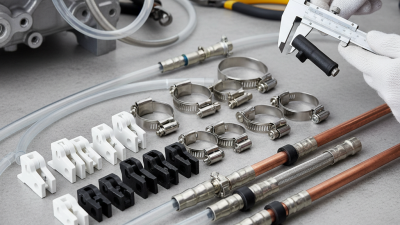
| Coupling Construction | Number of clamps, shield configuration, band design and resistance to pipe misalignment. | Shielded coupling with a corrosion-resistant shield and a separate elastomeric sealing gasket. | Cross-sectional drawing, assembly instructions and product photographs. | Required |
| Gasket Material | Compatibility with wastewater, temperature, chemicals and the selected pipe material. | Elastomeric gasket material identified by grade, such as NBR, EPDM or another approved compound, rather than described only as “rubber.” | Material declaration, applicable elastomer test report and temperature range. | Required |
| Nominal Size Coverage | Available sizes, outside-diameter compatibility and transition options between different pipe materials. | Common no-hub sizes include approximately 1½ to 15 inches in North American systems; larger or metric sizes require confirmation. | Size chart showing nominal size, actual outside diameter and allowable tolerance. | Required |
| Clamp and Shield Material | Grade, thickness, surface treatment and resistance to moisture and installation damage. | Stainless-steel components are commonly selected for corrosion resistance; specify grade and thickness in the purchase order. | Material certificate, thickness report and corrosion-resistance information. | Preferred |
| Installation Torque | Required torque, tightening sequence and whether a calibrated torque wrench is needed. | Use the torque stated by the applicable standard and coupling manufacturer; do not substitute a generic torque value across all designs. | Installation manual, torque table and tool-setting guidance. | Required |
| Pressure and Application Limits | Suitability for drainage, waste, vent, underground or special-pressure applications. | Standard no-hub couplings are generally specified for gravity drainage systems; pressure applications require a separately rated product. | Pressure rating, application statement and limitations under the relevant standard. | Required |
| Dimensional Accuracy | Consistency of gasket diameter, shield alignment, clamp position and pipe engagement. | Dimensions must remain within the tolerance stated on the approved drawing and applicable product standard. | Inspection plan, dimensional report and approved production drawing. | Required |
| Quality-Control Process | Incoming-material inspection, in-process checks, final inspection and batch traceability. | A documented quality system with lot identification and retained inspection records for each shipment. | Quality manual, inspection checklist, sample inspection report and lot code format. | Preferred |
| Testing Capability | Ability to verify leakage resistance, clamp performance and material properties before shipment. | Test methods should correspond to the claimed standard and the actual coupling design. | Test procedure, test frequency, laboratory qualification and batch test results. | Preferred |
| Packaging for Export | Protection from deformation, moisture, contamination and mixed-size errors during international transport. | Individual or grouped packaging with size labels, quantity marks, protective cartons and pallet stabilization. | Packaging photographs, carton dimensions, gross weight and packing list format. | Required |
| Order Quantity and MOQ | Minimum order by size, coupling type, material and customized packaging. | MOQ varies by production setup and packaging requirements; obtain a written MOQ for every size and configuration. | Formal quotation showing MOQ, price breaks and mixed-size order rules. | Required |
| Production Lead Time | Time from approved purchase order and artwork to finished goods ready for dispatch. | Stock items may ship faster, while custom sizes or packaging normally require additional production time; request a dated schedule. | Production plan with order confirmation date, inspection date and estimated ship date. | Required |
| Sample Approval | Whether pre-production samples can be evaluated for fit, gasket compression and installation torque. | Approve samples using the same material, tooling and manufacturing process intended for mass production. | Sample invoice, dimensional sample report and signed approval record. | Preferred |
| Traceability | Ability to link finished couplings to raw materials, production date and inspection records. | Each carton or batch should have a readable lot code that matches shipping and quality documents. | Traceability procedure, lot-code example and certificate-of-conformity template. | Preferred |
| International Shipping Data | HS classification, carton count, dimensions, gross weight and preferred Incoterms. | Shipping documents should consistently match the commercial invoice, packing list and purchase order. | Pro forma invoice, packing list, HS-code proposal and freight quotation. | Required |
| Commercial Terms | Currency, payment schedule, validity period, warranty and responsibility for nonconforming goods. | Use clear terms for sample approval, inspection, claim periods, replacement parts and documented corrective action. | Signed quotation, sales contract, warranty terms and claim-handling procedure. | Required |
| Customization Capability | Private labeling, carton design, clamp configuration, gasket compound and non-standard dimensions. | Customization should be controlled through an approved drawing and written change-management process. | Customization quotation, artwork proof, drawing revision and sample approval record. | Optional |
| Recommended Ordering Sequence | Process used to reduce technical, quality and logistics risk. | Specification review → sample approval → quotation confirmation → purchase order → pre-shipment inspection → document release. | Complete order checklist and signed approval milestones. | Required |