Leave Your Message
China has become a major sourcing hub for Pipe Strap products used in plumbing, construction, fire protection, HVAC, and industrial projects. Its manufacturers offer stamped steel straps, galvanized clamps, stainless steel supports, and custom-fabricated solutions. However, product variety does not always mean consistent quality.
This guide examines China’s top Pipe Strap manufacturers for global buyers. It considers material grades, forming accuracy, coating durability, load performance, production capacity, customization, and export experience. A reliable supplier should provide clear drawings, inspection records, sample approval, and practical packaging details. A polished website is not enough.
Pipe-support engineer Michael A. Smith, P.E., offers a useful reminder: “A good strap supports the pipe without fighting its natural movement.” That principle matters on a real jobsite. A strap may look simple, but weak edges, poor holes, or thin coatings can create trouble above a ceiling or inside a damp plant room.
The selection process also considers factory audits, communication speed, and after-sales responsibility. These details are easy to overlook. They should not be.
No supplier is flawless, and every factory has limits. Some excel at standard carbon-steel parts but struggle with tight tolerances. Others accept custom orders but need higher minimum quantities. Buyers should compare evidence, not promises. This introduction prepares global purchasers to evaluate Chinese Pipe Strap manufacturers with clearer expectations, more technical confidence, and fewer expensive surprises.
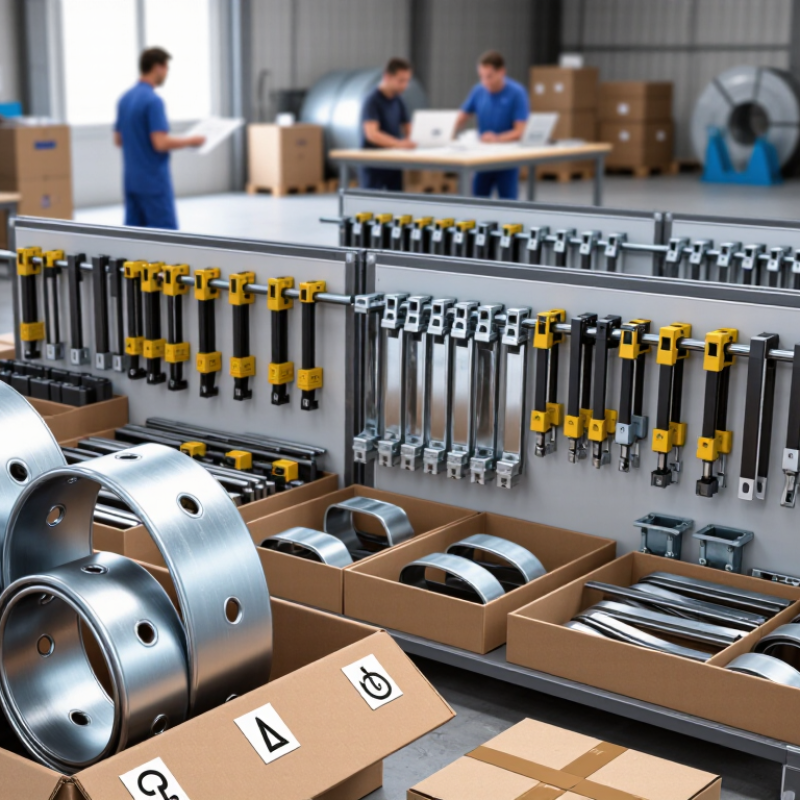
Pipe straps are fastening components that secure pipes to walls, ceilings, floors, or support frames. A typical strap has a curved body, fixing holes, and a surface designed to resist movement. It may be made from galvanized steel, stainless steel, aluminum, or reinforced polymer. The correct choice depends on pipe weight, temperature, moisture, and installation conditions.
Global buyers need pipe straps because unsupported pipes can sag, vibrate, or place stress on joints. In water systems, a loose strap may create noise and gradual leakage. In industrial settings, poor support can damage insulation or connected equipment. Buyers working with Chinese manufacturers often request samples, dimensional drawings, material certificates, and load test records. These documents help confirm whether a product suits the intended application.
Small details matter. Hole spacing should match common fasteners. Edges should be smooth, not sharp. Coatings must cover bends and cut areas evenly. During sourcing reviews, I have found that attractive pricing sometimes hides thin metal or inconsistent punching. That risk is easy to underestimate. A strap can look strong but deform during installation. Buyers should also check packaging, corrosion protection, and tolerance control. No single design fits every pipe system. Even an experienced purchasing team may need to revise its specification after field testing.
Buyer-oriented overview of pipe strap types, materials, dimensions, applications, and international procurement considerations
| Pipe Strap Type | Common Materials | Typical Size Formats | Typical Applications | Main Advantages | Important Buyer Checks |
|---|---|---|---|---|---|
| One-Hole Pipe Strap | Galvanized carbon steel, stainless steel, aluminum | Commonly supplied for small and medium pipe outside diameters; hole size and center distance vary by design | Electrical conduit, plumbing lines, light mechanical installations | Simple installation, low material usage, economical for routine support | Pipe outside diameter, screw or anchor compatibility, coating thickness, allowable load |
| Two-Hole Pipe Strap | Pre-galvanized steel, hot-dip galvanized steel, stainless steel | Available in multiple pipe diameters with two fixing points for improved stability | Water supply, HVAC, fire-protection support, industrial pipe routing | Reduces rotation and provides more stable pipe positioning than a single-hole design | Hole spacing, fastener grade, base material, vibration conditions, installation clearance |
| Cushioned Pipe Clamp | Steel clamp with EPDM, PVC, rubber, or other elastomeric lining | Sized by pipe outside diameter; metric and inch size ranges are commonly offered | Pipes requiring vibration isolation, noise reduction, or surface protection | Helps reduce metal-to-metal contact, abrasion, noise, and minor vibration transmission | Liner temperature range, chemical compatibility, UV resistance, liner bonding, clamp load |
| Heavy-Duty Pipe Clamp | Carbon steel, ductile iron, stainless steel, often with replaceable liners | Usually selected for medium-to-large pipe outside diameters and higher support loads | Industrial piping, process lines, construction equipment, structural support systems | Higher mechanical strength and better resistance to movement under operating loads | Rated working load, bolt size, clamp material, weld quality, corrosion protection, testing records |
| Stainless Steel Pipe Strap | Austenitic stainless steel such as common 304 or 316 grades | Metric and inch sizes selected according to pipe outside diameter | Wet areas, food-processing environments, coastal locations, chemical service | Improved corrosion resistance compared with ordinary carbon steel in many environments | Exact stainless grade, chloride exposure, galvanic compatibility, surface finish, material certificate |
| Plastic or Nylon Pipe Strap | Nylon, polypropylene, PVC, or other engineering plastics | Usually supplied for small-diameter tubing, conduit, and lightweight piping | Low-voltage installations, irrigation, residential plumbing, cable and tubing management | Lightweight, electrically nonconductive, and resistant to many common moisture conditions | Operating temperature, UV exposure, flame rating, chemical resistance, brittleness, allowable load |
| Pipe Repair or Saddle Strap | Stainless steel, galvanized steel, ductile iron, elastomeric sealing materials | Selected by pipe outside diameter, repair length, pressure class, and sealing profile | Temporary or permanent repair of localized leaks and damaged pipe sections | Can restore sealing around a damaged section without replacing the entire pipe run | Pressure rating, pipe material, defect size, gasket compatibility, bolt torque, installation procedure |
| Data Dimension | Common Options or Reference Points | Why It Matters in International Purchasing |
|---|---|---|
| Pipe Measurement | Outside diameter, nominal pipe size, metric size, or inch size | Nominal pipe size does not always equal the actual outside diameter, so fit should be confirmed using dimensional drawings. |
| Steel Protection | Electro-galvanized, pre-galvanized, hot-dip galvanized, painted, or stainless steel | The selected protection system affects corrosion resistance, service life, appearance, and suitability for outdoor or humid environments. |
| Material Standards | ASTM, EN, ISO, DIN, JIS, or project-specific specifications | Clear standards reduce ambiguity regarding chemical composition, dimensions, coating, testing, and inspection. |
| Load and Safety | Working load, safety factor, bolt torque, spacing, and support configuration | A pipe strap must be evaluated as part of the complete support assembly rather than by appearance alone. |
| Packaging and Export | Bulk cartons, barcode labels, palletization, moisture protection, and export documentation | Consistent packaging helps prevent coating damage, quantity discrepancies, and delays during customs clearance. |
| Quality Documentation | Dimensional inspection report, material certificate, coating report, load test, and pre-shipment inspection | Documentation supports project approval, traceability, incoming inspection, and compliance with local regulations. |
Note: Size ranges, load ratings, temperature limits, and applicable standards vary by design and end use. Buyers should confirm the manufacturer’s technical drawing, test data, and project requirements before ordering.